
Gravel Driveway Waynesboro, GA — Rutted, Washed Out, or Starting Fresh?
Waynesboro Gravel Handles It.
Waynesboro Gravel installs and repairs gravel driveways throughout Burke County, Georgia — rural driveway construction, pothole repair, regrading, gravel delivery and spreading, and land grading for access routes.
Get a Free Driveway QuoteHow much does gravel driveway installation cost in Waynesboro Burke County?
Gravel driveway installation in Waynesboro typically requires 90–100 tons of material — 60 tons of compacted crusher run base and 30–40 tons of surface stone. Burke County's red clay soil demands proper base preparation; without it, surface stone sinks into clay within one to two wet seasons. Service is available throughout Burke County's six communities.
Services Offered
We Handle
Communities Served
Accepted Online
How Your Driveway Quote Works — From Start to Finish
Request a Quote
Fill out our form with your driveway location and project details — takes 2 minutes.
Site Assessment
We assess the property, measure the driveway, and evaluate base and drainage conditions.
Get Your Estimate
Receive a detailed estimate based on actual site conditions — not a formula or guess.
We Get to Work
Base prep, grading, gravel delivery, and spreading — done to spec for Burke County clay.
Driveway Services — Burke County, Georgia
Six services covering every gravel driveway need in Waynesboro and surrounding communities — installation, repair, grading, gravel delivery, restoration, and land grading for properties of any size.
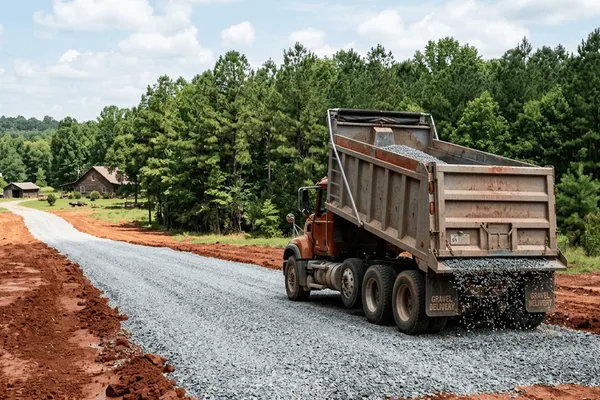
Gravel Driveway Installation
New driveway construction on raw land or existing paths — compacted crusher run base layer, surface stone application, and drainage crown grading for driveways up to 800 feet or more.
Learn More →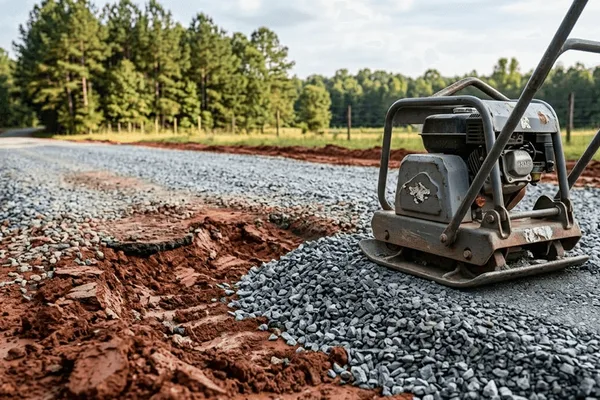
Gravel Driveway Repair
Pothole filling, rut repair, and surface restoration — base-compacted repairs using properly matched stone, not just loose fill, for a surface that holds through rainy seasons.
Learn More →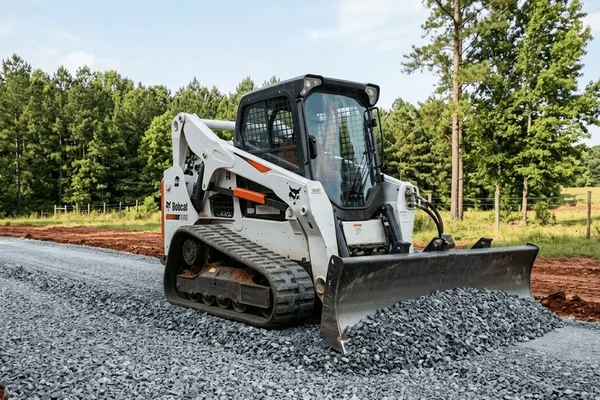
Driveway Grading
Regrading worn or rutted surfaces to restore the drainage crown that prevents water from channeling down the driveway — the primary cause of stone loss and washout in middle Georgia.
Learn More →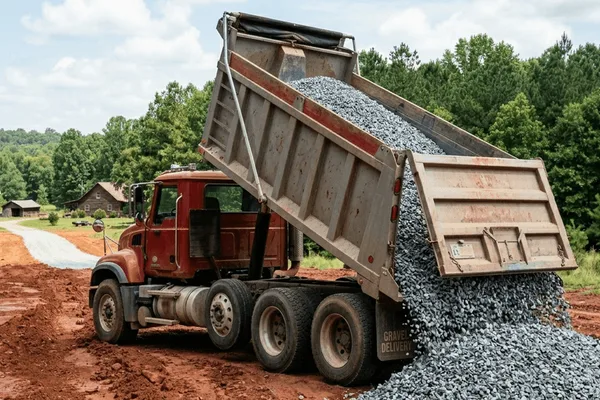
Gravel Delivery & Spreading
Crusher run, #57 stone, or pea gravel delivered and spread on your property — we calculate material quantities based on your driveway dimensions, not guesswork.
Learn More →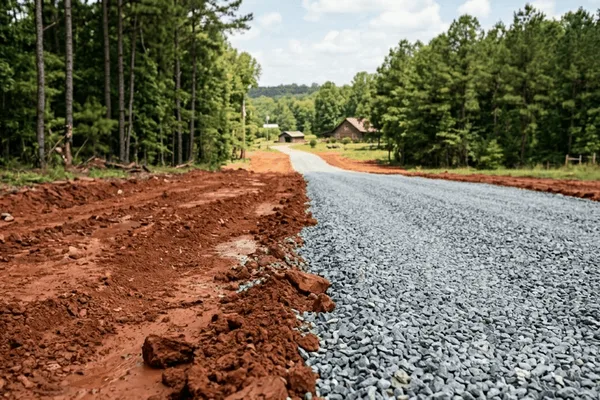
Driveway Restoration
Full resurfacing for driveways that have lost most of their surface stone — new base work and fresh material applied to spec, returning heavily deteriorated driveways to functional condition.
Learn More →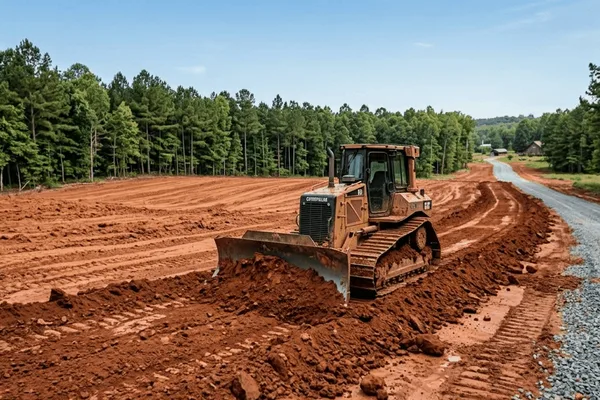
Land Grading
Site grading for access routes, farm roads, and rural property where no driveway yet exists — we shape the terrain and establish proper drainage before any stone is applied.
Learn More →Why Base Prep Matters for Any Gravel Driveway
Red Clay Doesn't Drain — It Holds Water
Burke County's red clay subgrade is dense and slow-draining. Rain doesn't percolate — it saturates the clay and creates the soft, unstable base that causes driveways to develop ruts, sink, and wash out. Without a compacted crusher run base that bridges this clay layer, surface stone simply migrates downward over time. Proper base preparation is not optional here — it is the difference between a driveway that lasts and one that fails by year two.
Every Driveway Needs a Site Assessment First
Length, existing base condition, access slope, drainage patterns, and traffic type all affect material quantities and scope. A 300-foot surface restoration on sound base is a completely different job from a 500-foot new build on raw clay. We assess every property before quoting — so your estimate reflects the actual conditions, not a formula.
A Real Gravel Driveway Has Three Components
A properly built gravel driveway is not stone dumped on dirt. It requires a compacted crusher run base (4–6 inches), a surface stone layer (#57 or similar, 2–4 inches), and a drainage crown that slopes water off the surface. Miss any one of these three elements — especially on local clay — and your surface will deteriorate predictably and expensively.
Signs Your Driveway Needs Professional Attention
- Potholes and ruts that refill with water after every rain
- Gravel has washed to the edges or into the yard, leaving a dirt track
- Standing water on the driveway surface after storms
- Soft spots where vehicles are leaving deep tire impressions
- New property access needed where no driveway currently exists
- Driveway has not been regraded or topped up in 3+ years
- Base failure visible — gravel sinking into soft clay underneath

Common Questions About Gravel Driveways
How much does a gravel driveway cost?
Gravel driveway installation typically costs between $8 and $18 per linear foot for a standard residential driveway, with full installations ranging from $2,000 to $8,000 or more depending on driveway length, base condition, and gravel type selected. A local driveway in Waynesboro or the surrounding county commonly runs 300 to 600 feet, so it is always more useful to frame cost in total length terms rather than per-square-foot figures. Pothole and spot repairs run $200–$800 depending on scope, while full resurfacing typically costs $1,000–$4,000.
How deep should a gravel driveway be?
A properly built gravel driveway requires a compacted crusher run base layer of 4 to 6 inches, topped with 2 to 4 inches of surface stone such as #57. The local red clay soil does not drain naturally — skipping the base layer causes stone to sink into soft clay within one to two seasons. Total installed depth of 6 to 10 inches is standard for residential driveways handling regular vehicle traffic.
What is the best gravel for a driveway?
Crusher run is the preferred base material because it compacts tightly and binds well in local red clay conditions, creating a stable foundation. For the surface layer, #57 crushed stone provides good drainage and a clean finish that holds up under vehicle traffic. Pea gravel is sometimes used for light-traffic or decorative applications but tends to scatter on longer rural driveways and does not hold a crown as well as angular crushed stone.
How do you fix potholes in a gravel driveway?
Fixing potholes properly involves clearing loose material from the hole, compacting the base, and filling with crusher run before adding a surface cap — simply filling with loose stone causes the repair to wash out within one rain cycle. For widespread pothole damage across a local driveway, a full regrading pass often produces better long-term results than spot filling individual holes. Standing water in potholes indicates a drainage issue that must be addressed at the same time or the repair will fail.
Is a gravel driveway cheaper than concrete?
A gravel driveway typically costs 60 to 80 percent less per linear foot than concrete or asphalt paving. A 400-foot local driveway that might cost $4,000–$6,000 installed would cost $20,000–$35,000 in concrete — making gravel the practical choice for long rural access roads. Gravel also handles heavy equipment traffic better than concrete on soft clay subgrades, and repairs are far less expensive when damage does occur.
How do you stop gravel driveway erosion?
Erosion is primarily caused by improper drainage crown — water channeling down the driveway surface instead of sheeting off to the sides. Correcting it requires regrading to restore a center crown of 1.5 to 2 inches, adding drainage swales where needed along the edges, and applying fresh crusher run where washouts have exposed the clay base. The heavy summer rainstorms in this region make proper crown grading the single most important factor in a gravel driveway's longevity.
Who installs gravel driveways near me?
Waynesboro Gravel is the local driveway contractor serving all of Burke County — including Midville, Sardis, Girard, Keysville, and Vidette. We handle new construction from raw land, pothole and rut repair, full regrading, gravel delivery and spreading, and land grading for new access routes. Request a free quote through our contact form and we'll assess your property and respond promptly.
Can a gravel driveway be plowed?
A gravel driveway can be plowed, though snow events are infrequent in this part of middle Georgia. A properly graded surface with a compacted crusher run base handles occasional winter conditions well. The main risk with plowing is the blade catching loose surface stone — a tightly compacted base minimizes this issue. For properties that do experience ice events, the rough texture of a gravel surface generally provides better traction than a smooth paved surface.
How long does a gravel driveway last?
A properly installed gravel driveway with a compacted crusher run base and adequate drainage crown will last 10 to 20 years or more before needing major reconstruction. Annual top-dressing with surface stone and regrading every 3 to 5 years significantly extends service life. The local red clay base, combined with heavy summer rains, means driveways built without proper drainage preparation deteriorate much faster — sometimes within 2 to 3 seasons.
What is crusher run and is it good for driveways?
Crusher run is a mixture of crushed stone and stone dust that compacts tightly to form a solid, stable base layer — it is the preferred base material in middle Georgia because it bonds well with red clay subgrade and resists washout better than clean stone. Unlike round gravel, the angular edges of crusher run particles lock together under compaction, creating a surface that stays stable under vehicle traffic. It is used as the base layer with #57 or similar clean stone applied on top for the driving surface.
How do you fix ruts in a gravel driveway?
Fixing ruts requires more than just adding stone — deep ruts indicate the base has been displaced and needs to be re-compacted before new material is applied. For minor ruts, adding crusher run and grading smooth will restore the surface. For severe rutting where vehicles leave impressions deeper than 3 to 4 inches, the affected section typically requires base material removed and replaced before regrading. The local clay soil becomes especially soft during wet seasons, which is when most rut damage occurs.
How wide should a gravel driveway be?
A standard residential driveway should be 10 to 12 feet wide for single-lane traffic, and 16 to 20 feet wide for two-lane or passing access on longer rural driveways. Farm roads and agricultural access roads commonly require 14 to 16 feet minimum to accommodate tractors, delivery trucks, or logging vehicles. Wider is almost always better on long rural driveways where pulling off to pass would otherwise require leaving the improved surface.
What size gravel is best for a driveway?
#57 crushed stone (approximately 3/4-inch to 1-inch diameter) is the most commonly used surface gravel because it drains well, holds a stable surface, and does not scatter as readily as smaller sizes. Crusher run — which includes fines down to dust size — is the standard base material under the surface layer. Pea gravel (3/8-inch round stone) is sometimes used for light-traffic paths but is not recommended for long rural driveways where turning forces cause significant material displacement.
Does a gravel driveway need a base layer?
Almost always — especially given the red clay soil profile common throughout this area. Without a crusher run base, surface stone sinks into the clay subgrade within one to two wet seasons, creating ruts, soft spots, and drainage problems that become progressively more expensive to correct. A 4 to 6 inch compacted crusher run base is the industry standard on Georgia clay, and skipping it is the most common cause of premature driveway failure in this region.
What are the pros and cons of a gravel driveway?
The advantages include significantly lower installation cost compared to concrete or asphalt, excellent drainage when properly graded, the ability to handle heavy equipment without cracking, and straightforward repair when damage occurs. The primary disadvantages are that gravel requires periodic top-dressing and regrading — typically every 3 to 5 years — and loose surface material can migrate to the edges or yard over time. For most rural properties with long access roads, gravel is the only cost-effective option and the practical benefits outweigh the maintenance requirements.
How do you keep gravel from washing away on a driveway?
Two things: proper drainage crown so water sheets off the sides rather than channeling down the driveway surface, and angular stone (crusher run or #57) rather than round stone that rolls easily. Edge containment using ditch lines or drainage swales helps direct runoff away from the driveway. The summer rainfall intensity in this area makes these preparations non-optional — a flat or improperly crowned driveway will wash out consistently regardless of how much material is applied.
How often does a gravel driveway need to be regraded?
Most gravel driveways benefit from regrading every 3 to 5 years under normal residential use, though driveways with heavy vehicle traffic or drainage issues may need it more frequently. Annual visual inspection after the wet season will indicate whether the crown has flattened, ruts have formed, or surface stone has migrated. Properties in low-lying areas or with slopes that direct runoff onto the driveway may need regrading more often due to accelerated washout patterns.
Can you install a gravel driveway on a slope?
Yes, though grades steeper than 12 to 15 percent require additional drainage engineering to prevent washout. On sloped driveways, crusher run base material is essential because it compacts and resists the downhill migration that loose round stone would experience. For very steep grades, cross-drain culverts and lateral ditches are often incorporated to interrupt the flow path before it gains enough energy to displace surface stone. Many rural properties in this area have natural grade changes that require these drainage measures as part of a proper installation.
How much gravel do I need for a driveway?
A rough estimate for a 400-foot driveway that is 12 feet wide and 6 inches deep (base + surface) is approximately 90 to 100 tons of material total — roughly 60 tons of crusher run base and 30 to 40 tons of surface stone. Exact quantities depend on the existing base condition, any soft spots requiring additional fill, and whether the full depth is being installed new or just a surface refresh. We calculate material quantities during the site assessment so your quote reflects actual job conditions rather than a formula estimate.
What is the difference between #57 stone and crusher run?
#57 stone is clean, washed crushed granite or limestone sized at approximately 3/4-inch — it drains freely, provides a clean driving surface, and is used as the top layer. Crusher run is a blend of crushed stone and fine stone dust that compacts tightly and bonds together — it is used as the base layer because its fines fill voids and create a solid platform that prevents the surface stone from sinking into the clay subgrade. The correct installation uses crusher run on the bottom and #57 stone on top — not one or the other exclusively.
How long does gravel driveway installation take?
Most installations take 1 to 3 days depending on length, site conditions, and whether land grading is required first. A straightforward 200-to-300-foot driveway on flat, cleared land can often be completed in a single day. Longer driveways of 400 to 800 feet — common on rural properties — or installations requiring land grading from raw clay typically run 2 to 3 days. We confirm a realistic timeline during the site assessment before scheduling.
What is the best gravel for red clay soil in Georgia?
Where red clay is the dominant soil type, crusher run is the best base material because its angular particles and stone fines compact into the clay subgrade, locking together to form a stable platform that resists seasonal softening after rain. For the surface layer, #57 crushed stone performs best because it drains quickly off the driveway crown and does not sink into the compacted base the way finer materials would. Geotextile fabric is sometimes added between the clay subgrade and the crusher run base on soft or wet sites to prevent base material from migrating down into saturated clay over time.
Do I need to clear land before installing a gravel driveway?
Yes — if the driveway path runs through wooded or heavily overgrown land, clearing is required before grading or stone can begin. Trees, stumps, and root systems must be removed before equipment can shape the terrain and before a base layer can be properly compacted. Waynesboro Land Clearing handles clearing and stump grinding throughout Burke County as the first step in new driveway development. Once the path is cleared, our land grading service shapes the terrain before installation begins.
Serving Burke County, Georgia — and Surrounding Communities
Waynesboro Gravel installs and repairs driveways throughout all of Burke County — from the county seat to its most rural communities.
No middlemen. No dispatch center. Locally based — knowing the local roads and red clay — not a national company routing jobs from out of state.
Local property owners can find permit information and county resources at the Burke County, Georgia official website.
Get a Free Driveway Quote
Describe your gravel driveway — Waynesboro, GA and all Burke County properties welcome. We'll get back to you with an honest estimate.